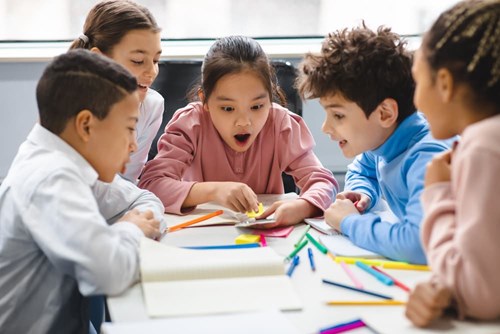
Young children are in a crucial stage of social and emotional development. It’s a time when they learn to express emotions and understand the expectations of structured environments. For teachers, early childhood behavior management goes beyond discipline. It creates a nurturing classroom atmosphere fostering growth, respect and cooperation.
When children feel secure and understood, they are more likely to engage in positive behaviors and develop essential self-regulation skills.
Successful behavior management in early childhood classrooms relies on proactive strategies that encourage children to make positive choices while addressing challenges with empathy and consistency. By applying evidence-based strategies, educators create a structured yet flexible classroom environment that promotes academic and social success.
Establishing Clear Expectations and Routines
Young children thrive on predictability. Establishing clear classroom expectations and consistent routines helps create a structured learning environment where students feel safe and confident. A key to successful early childhood behavior management is creating an environment where children know what to expect, making them less likely to display challenging behaviors due to uncertainty or confusion.
- Set simple, age-appropriate rules. Use positive language to frame expectations. Keep rules short and easy to remember, reinforced through visuals and repetition.
- Create visual schedules. Picture schedules help young children understand daily routines, reduce anxiety and help with transitions. Displaying images of activities like circle time, snack time and outdoor play can clarify expectations.
- Use transition cues. Giving advance notice before transitions helps children transition smoothly from one activity to another. Songs, timers or hand signals can make transitions more predictable and reduce resistance.
Encouraging Positive Behavior Through Reinforcement
Recognizing and reinforcing positive behaviors helps children understand expectations and encourages them to make good choices. Specific praise, rather than general approval, is particularly effective. This approach clearly communicates the behavior being encouraged, making it more likely to be repeated.
Incorporating reward systems, such as sticker charts or classroom jobs, can provide additional motivation. However, the focus should remain on effort and participation rather than just outcomes. Acknowledging small successes is also essential as young children develop at different paces. Encouraging persistence and growth promotes self-esteem and reinforces the idea that effort leads to improvement.
Modeling and Teaching Social-Emotional Skills
Children learn social behavior by observing the adults around them. Teachers play a crucial role in modeling appropriate ways to express emotions and interact respectfully with others. Demonstrating emotion regulation in everyday interactions helps children develop these skills themselves. For instance, when a teacher openly expresses their emotions by saying, “I’m feeling frustrated, so I’m taking a deep breath,” they model self-regulation techniques that children can use in their own lives.
Using stories and role-playing is another effective way to teach social-emotional skills. Reading books about emotions and acting out social scenarios provides opportunities for children to practice empathy, cooperation and conflict resolution.
When conflicts arise, guiding children through the problem-solving process rather than providing an immediate solution helps them learn how to navigate interpersonal challenges independently.
Fostering a Supportive and Inclusive Classroom Environment
A positive classroom environment helps prevent challenges in early childhood behavior management. When children feel valued and included, they are more likely to cooperate and engage with peers and teachers. Creating a designated quiet space in the classroom where children can self-regulate when they feel overwhelmed provides an important emotional support system. A calming area with soft seating, books and sensory objects can give children the space to process emotions constructively.
Celebrating diversity and recognizing individual strengths further promotes a sense of belonging. Acknowledging different backgrounds, learning styles and unique qualities helps children feel respected and encourages them to appreciate others. Building strong teacher-student connections is also key. Taking time to build relationships with students makes them more likely to respond positively to guidance and redirection.
Fresno Pacific University’s Early Childhood Behavior Management Course
Fresno Pacific University offers an online professional development course, Behavior Management in ECE Classrooms. This course provides research-backed techniques and practical applications for educators looking to deepen their understanding of behavior management strategies in early childhood classrooms. It equips teachers with the skills to create a structured yet nurturing classroom environment that supports children’s emotional and behavioral development.
The program explores key topics such as proactive behavior management techniques, positive reinforcement strategies and approaches to addressing challenging behaviors with empathy and consistency. Designed for early childhood educators, it helps participants develop classroom strategies that foster respect, cooperation and a positive learning atmosphere.
The course is one of many professional development courses offered to educators through Fresno Pacific University’s continuing education program.