 Teachers trying to teach math, especially to students who don’t really like math, stay on the lookout for any edge they can get that will make students engage. For many educators, recreational math puzzles offer a practical way to lower resistance and spark curiosity in the classroom.
Fresno Pacific University, which offers hundreds of continuing education courses for teachers, has one that focuses on recreational math for the classroom. In the course, teachers learn to use games and puzzles to get students excited about math.
A CD included in the course provides teachers a collection of puzzles, games, riddles, number tricks and brainteasers they can use in the classroom. Fresno Pacific also gives teachers instructions for tangrams, pentominoes and the “24” game.
For many students, “recreational math” strikes them as an oxymoron. But it's grown in popularity as teachers see the results. By using recreational mathematics puzzles, many have more success in helping students understand and apply math concepts.
The hope is that engagement with math puzzles will translate into the traditional coursework. When students feel less intimidated, they are more likely to persist through challenging material. To help teachers get started, here’s a list of puzzles that have proven successful for many teachers.
Finding the Right Recreational Mathematics Puzzles
Puzzles are like food – it’s all a matter of preference and taste. Not every student will take to the same challenge. Luckily, there’s no shortage of choices.
A smart first step is to search through puzzles and math games. You can also consider the following choices for your recreational math efforts.
Sudoku
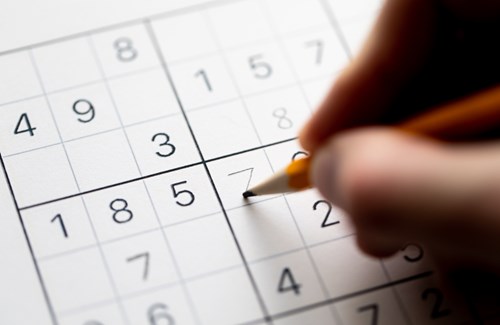
This simple but endlessly fascinating game gives students the satisfaction of using logic to solve a puzzle. Sudoku works more on logic skills than mathematical concepts, but it helps students practice reasoning, pattern recognition, and identifying relevant information.
Monopoly
Monopoly is a great teaching game that requires players to make financial decisions on almost every turn. This requires a great deal of addition and subtraction, as well as determining what future earnings could be on individual properties. For many students, it serves as an early introduction to applied math and financial decision-making.
The Game of Life
Much like Monopoly, The Game of Life can teach students basic math skills. The game provides a real-world context for numbers, including salaries (and how a college degree can impact them) and the costs of raising children. By placing math concepts into familiar life scenarios, students can better understand how numbers apply beyond the classroom.
Card Games
Cards represent a fantastic resource for math teachers. Dozens of fun games involve cards, and each of them requires using some type of math skill. For example, the game of “21” requires students to calculate risk based on numbers. Solitaire provides a way for students to keep math skills sharp on their own. For younger kids, a game of “Go Fish” teaches them simple math concepts, like different number combinations that add up to 10. And that’s just scratching the surface. You can find many options for card games on online sites designed for teachers.
Magic Squares
The late Martin Gardner, a journalist who covered the mathematical community, wrote about magic squares for Scientific American. Magic Squares contain numbers that add up to the same amount in every column, row and diagonal. Solving a magic square requires the logic of Sudoku with some math skills as well.
These represent just some of the recreational mathematics puzzles that can jump-start a student’s interest in learning math. While not every student will take to every puzzle, a thoughtful mix of logic puzzles, math games, and number challenges can help teachers reach a wider range of learners. Somewhere between board games, card games, logic puzzles and number puzzles is the combination that will prove a winner.